RV ELECTRICAL FIELD PATH
Start with the loads. Then size the system.
Build one defensible trail from appliance labels to daily energy, battery time, solar input and inverter demand—before comparing products or planning installation work.
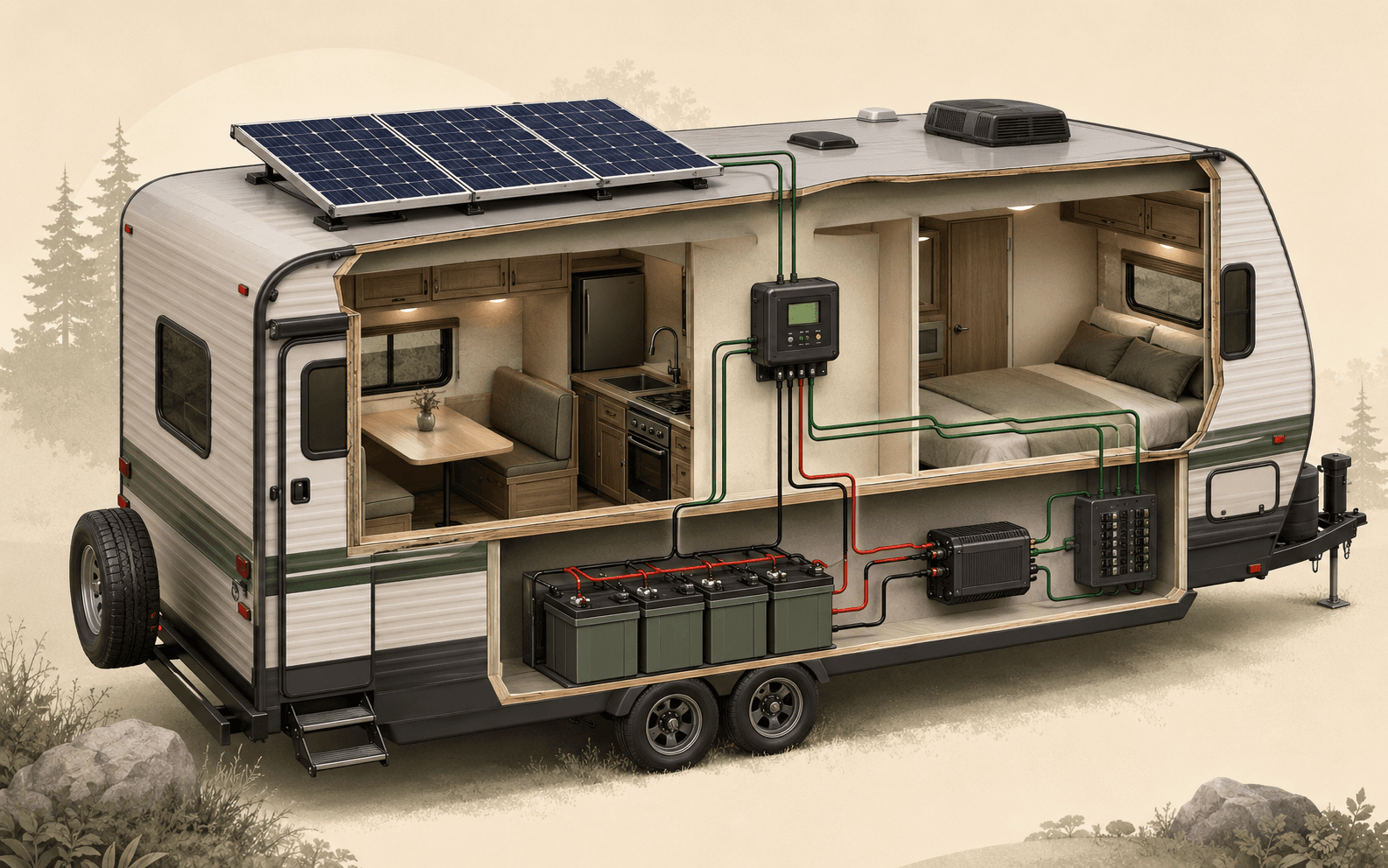
ONE COHERENT WORKFLOW
Move through the same numbers in the right order
List daily and simultaneous loads
Copy label watts, estimate run time, and keep energy use separate from startup and simultaneous demand.
Build the electrical load worksheetEstimate usable battery time
Carry average or specific load watts into a chemistry- and policy-aware runtime estimate.
Estimate battery runtimeEstimate a starting solar array
Use daily watt-hours, conservative effective sun and explicit system losses before checking roof and controller limits.
Estimate solar inputScreen inverter demand
Check continuous loads, the largest documented startup event, waveform, battery current and installation constraints.
Read the inverter sizing guideDOCUMENTED PRODUCT FORMATS
Compare only after the planning range is visible
These guides compare published specifications and fit boundaries; they do not claim undisclosed hands-on testing or universal compatibility.