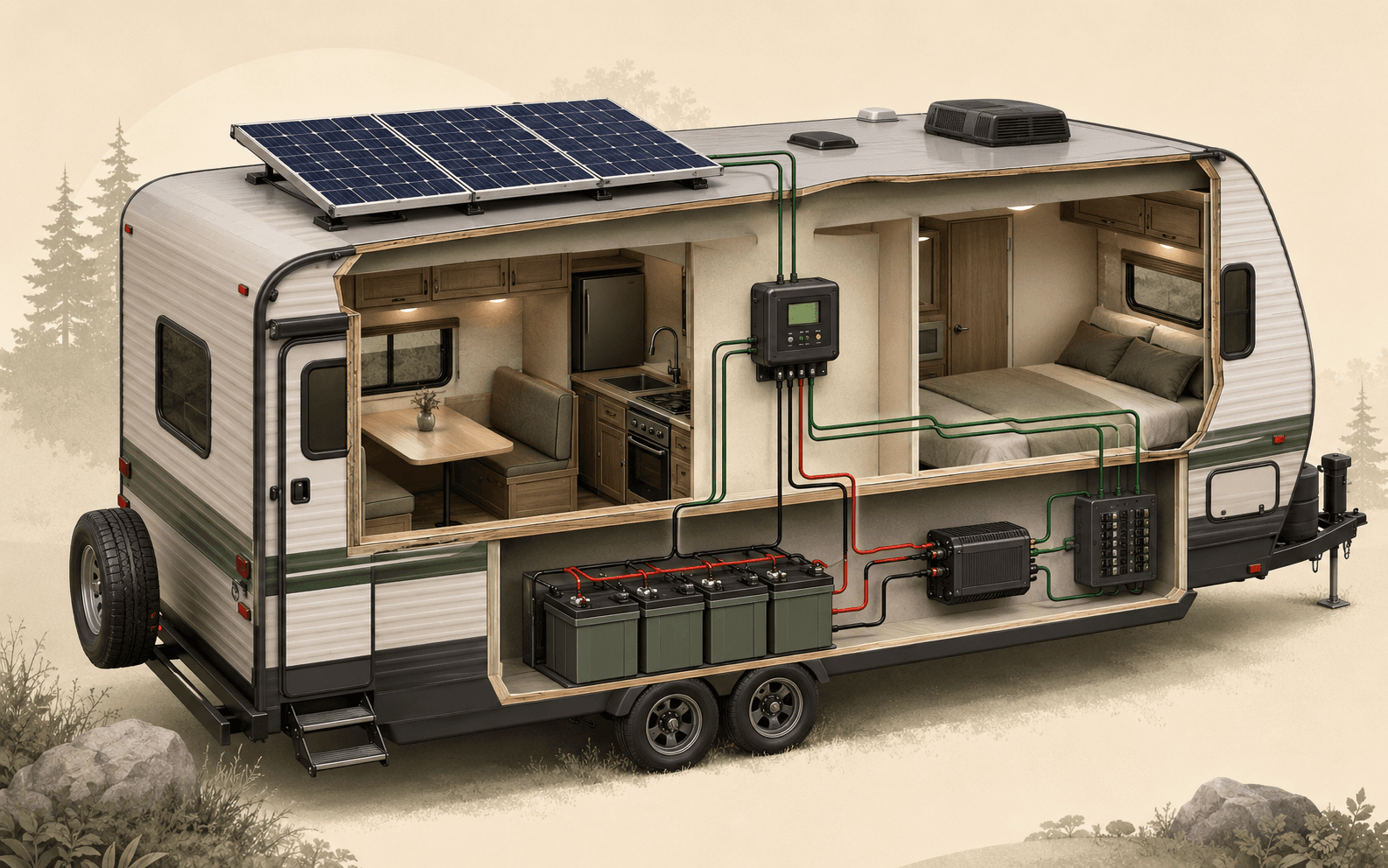
HOW TO USE THIS TOOL
Electrical Load Planner: what the result means
Use this before sizing a battery bank, solar array, inverter or generator from appliance labels and a realistic operating schedule.
Steps
- Copy watts from each appliance label or calculate watts from documented volts and amps.
- Enter realistic daily run time and quantity for each load.
- Mark only the loads that may run together and add the largest documented additional startup surge.
- Carry daily watt-hours to the battery and solar planners; carry simultaneous and peak watts to inverter guidance.
Formula
Daily energy = sum of appliance watts × hours per day × quantity; planning peak = selected simultaneous running watts + largest additional startup surge.
Important limits
- Nameplate input, measured consumption, duty cycle and startup demand are different quantities.
- This worksheet does not size conductors, over-current protection, disconnects, transfer equipment or ventilation.
- Follow the RV, appliance, battery, charger and inverter manufacturers and obtain qualified electrical help where required.
Primary references
TowCheck uses these references for terminology and planning context. Your exact vehicle, trailer, tire and equipment documentation always controls.