TowCheck field guide · Tire monitoring

Best trailer TPMS for long combinations and multi-axle rigs

A trailer TPMS can alert you to pressure or temperature changes while travelling, but it does not replace cold-pressure checks, tire inspection, correct loading, or the tire maker’s limits.

Source-reviewed 3 products compared
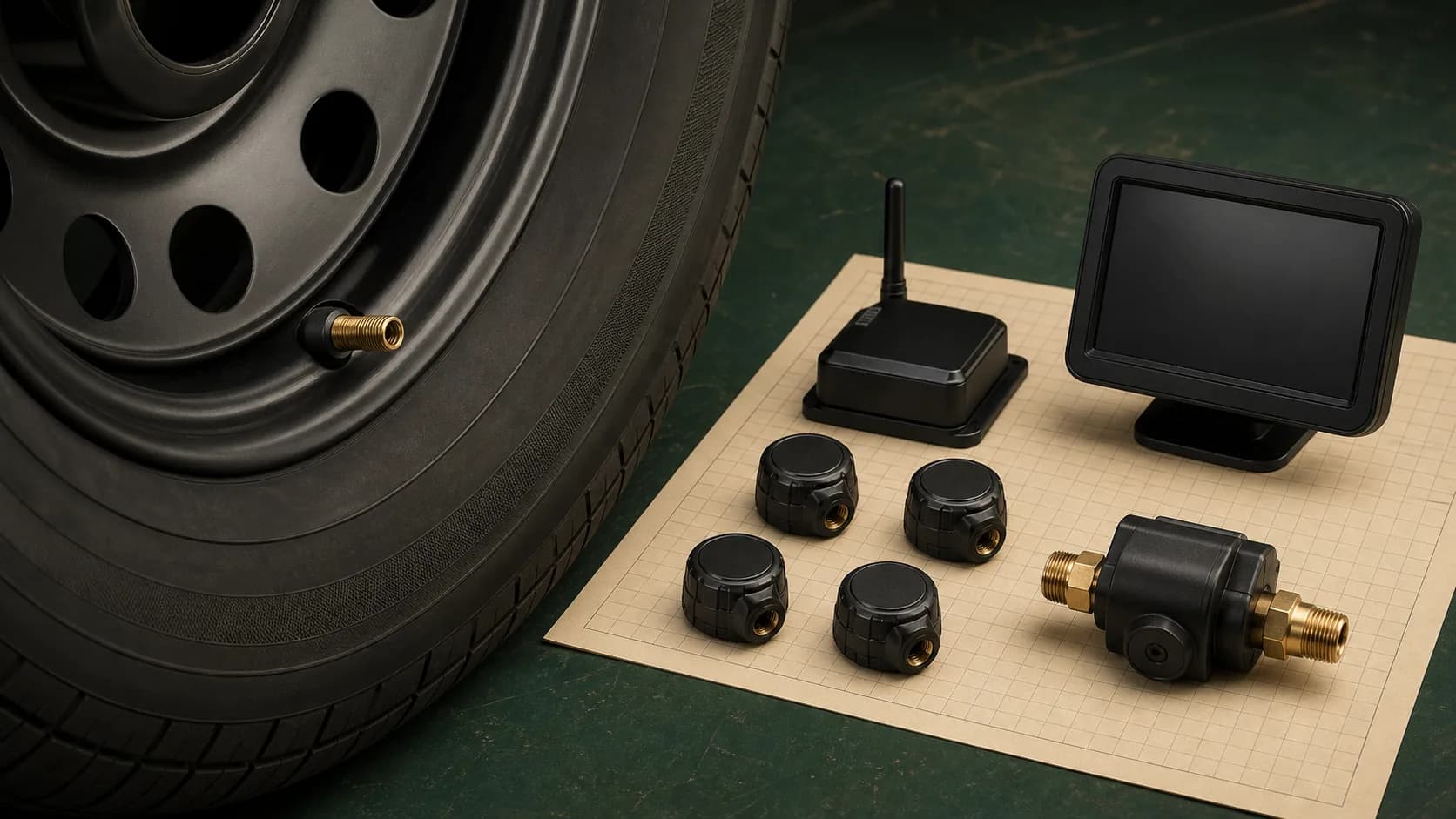
Generic trailer TPMS sensors, repeater, and display arranged beside a wheel valve stem on a technical workbench
Original TowCheck editorial artwork. Generic equipment is shown; product-format diagrams below are not scale replicas.

01 · Start here

Three distinct fits, not a universal winner

Choose the operating pattern that resembles your setup, then verify every capacity and compatibility constraint.

01

Best for Dedicated display and broad RV kit support

TST 507 RV System

The balanced dedicated-display choice for owners who want proven cap-sensor kits, a supplied repeater, and user-programmed alerts.

Tire capacity
Kit-dependent; expandable
Pressure range
0–196 PSI in reviewed manual

Important limit: There are multiple 507 sensor and display variants. Flow-through sensors have different valve-stem requirements, so kit names and manuals must be matched carefully.

Read the fit notes View manufacturer detailsDestination: Truck System Technologies or listed retailer
02

Best for Monitoring several vehicles from one display

TireMinder i10

A strong fit when a motorhome, trailer, or towed vehicle combination needs a dedicated display with room to grow.

Tire capacity
20 simultaneous; 40 across 4 vehicles
Pressure range
0–199 PSI on product page

Important limit: The display shows ten tires at once and requires switching for larger combinations. TireMinder’s product and technical pages present slightly different range/tolerance wording, so current documentation should govern setup.

Read the fit notes View manufacturer detailsDestination: TireMinder or listed retailer
03

Best for App-first monitoring in the OneControl ecosystem

Lippert Tire Linc

The most natural option here for owners already comfortable using a phone as the primary display.

Tire capacity
Expandable to 20
Pressure range
User-set alerts

Important limit: A phone and compatible app workflow become part of the monitoring chain; exact accessory, device, and warranty details should be confirmed for the current kit.

Read the fit notes View manufacturer detailsDestination: Lippert or listed retailer

Calculate first

Check tire load and pressure inputs first

Set alerts from the tire and vehicle documentation for your actual load—not from another owner’s generic alarm settings.

Open calculator

02 · Comparison

Fit-critical specifications at a glance

Price markers are relative within this comparison, not live quotes. Use each product’s source record for current specifications and availability.

Focus:
Product specifications and fit comparison
ProductBest forTire capacityPressure rangeSensor approachRepeaterRelative priceDetails
TST 507 RV SystemVerified 2026-07-22Dedicated display and broad RV kit supportKit-dependent; expandable0–196 PSI in reviewed manualCap or flow-through variantsIncluded in reviewed RV kit$$$Deep dive
TireMinder i10Verified 2026-07-22Monitoring several vehicles from one display20 simultaneous; 40 across 4 vehicles0–199 PSI on product pageReplaceable-battery capIncluded booster$$$Deep dive
Lippert Tire LincVerified 2026-07-22App-first monitoring in the OneControl ecosystemExpandable to 20User-set alertsCap sensorsRepeater/dock in aftermarket kit$$$Deep dive

Dedicated display and broad RV kit support

TST 507 RV System

Tire capacity
Kit-dependent; expandable
Pressure range
0–196 PSI in reviewed manual
Sensor approach
Cap or flow-through variants
Repeater
Included in reviewed RV kit
Relative price
$$$
Read the deep dive

Monitoring several vehicles from one display

TireMinder i10

Tire capacity
20 simultaneous; 40 across 4 vehicles
Pressure range
0–199 PSI on product page
Sensor approach
Replaceable-battery cap
Repeater
Included booster
Relative price
$$$
Read the deep dive

App-first monitoring in the OneControl ecosystem

Lippert Tire Linc

Tire capacity
Expandable to 20
Pressure range
User-set alerts
Sensor approach
Cap sensors
Repeater
Repeater/dock in aftermarket kit
Relative price
$$$
Read the deep dive

03 · How we evaluated

The criteria behind the short list

We favour documented constraints and reproducible setup over feature count. These pages do not represent hands-on laboratory testing unless explicitly stated.

  1. 01

    Reliable signal path for the full tow combination, including the repeater strategy.

  2. 02

    Sensor clearance, valve-stem requirements, battery service, and theft/security hardware.

  3. 03

    Alert customization, display readability, tire count, and multi-vehicle workflow.

  4. 04

    Current manuals, explicit operating ranges, support, and written warranty terms.

04 · Product notes

Where each option fits—and where it does not

Each recommendation is conditional. The “avoid when” note matters as much as the feature list.

Tire capacity
Kit-dependent; expandable
Pressure range
0–196 PSI in reviewed manual
Sensor approach
Cap or flow-through variants

Pick 1 · Dedicated display and broad RV kit support

TST 507 RV System

The balanced dedicated-display choice for owners who want proven cap-sensor kits, a supplied repeater, and user-programmed alerts.

Why it fits

Current kits support common four-, six-, and eight-sensor RV layouts, while the reviewed manual documents pressure/temperature alarms and replaceable cap-sensor batteries.

Strengths

  • Dedicated colour display
  • User-replaceable cap-sensor batteries
  • Programmable pressure and temperature alarms

Tradeoffs

  • Variant names require careful matching
  • Flow-through version calls for metal valve stems
Compatibility check
Cap sensors fit many rubber or metal stems; use metal valve stems for flow-through sensors and follow the repeater placement instructions.
Avoid when
You want an app-only interface or are unwilling to route power to the repeater and display.
Published limitation
There are multiple 507 sensor and display variants. Flow-through sensors have different valve-stem requirements, so kit names and manuals must be matched carefully.
Warranty record
Three years after registration in the reviewed manufacturer material.
Tire capacity
20 simultaneous; 40 across 4 vehicles
Pressure range
0–199 PSI on product page
Sensor approach
Replaceable-battery cap

Pick 2 · Monitoring several vehicles from one display

TireMinder i10

A strong fit when a motorhome, trailer, or towed vehicle combination needs a dedicated display with room to grow.

Why it fits

The product page supports up to 20 simultaneous tires and four saved vehicles, with a booster included in the reviewed package.

Strengths

  • Large multi-vehicle capacity
  • Dedicated colour display
  • Replaceable CR1632 batteries

Tradeoffs

  • Ten tires displayed at once
  • Published technical wording varies by support page
Compatibility check
Use the supplied booster, confirm sensor clearance, and follow TireMinder’s vehicle and disconnect-mode setup for stored configurations.
Avoid when
You want every tire visible at once on a combination above ten positions or prefer phone-only monitoring.
Published limitation
The display shows ten tires at once and requires switching for larger combinations. TireMinder’s product and technical pages present slightly different range/tolerance wording, so current documentation should govern setup.
Warranty record
Three years in the reviewed product material.
Tire capacity
Expandable to 20
Pressure range
User-set alerts
Sensor approach
Cap sensors

Pick 3 · App-first monitoring in the OneControl ecosystem

Lippert Tire Linc

The most natural option here for owners already comfortable using a phone as the primary display.

Why it fits

The aftermarket package pairs cap sensors with a repeater/dock and OneControl app alerts, and Lippert documents expansion up to 20 tires.

Strengths

  • App-based alerts
  • Expansion for larger combinations
  • Integrates with Lippert OneControl

Tradeoffs

  • Phone-dependent display
  • Current kit contents and compatibility need confirmation
Compatibility check
Confirm current OneControl app/device requirements, sensor clearance, repeater power, and the number of sensors in the selected package.
Avoid when
You require an always-on dedicated display that does not depend on a phone.
Published limitation
A phone and compatible app workflow become part of the monitoring chain; exact accessory, device, and warranty details should be confirmed for the current kit.
Warranty record
Verify the current kit’s written Lippert warranty before purchase.

Decision tool

Choose a TPMS workflow

The best system is the one you can read, maintain, and test before each trip.

01How do you want alerts presented?
02What does the system need to remember?

05 · Selection method

How to make the final choice

A product page tells you what a component can do. Your measured setup determines whether it belongs in the system.

01

Start with cold inflation pressure

Use the vehicle placard, tire maker’s load/inflation information, and measured loads. A TPMS alarm threshold should be a deliberate result of that process.

02

Treat the repeater as part of the system

Long tow combinations can attenuate low-power sensor signals. Install, power, and test the supplied or recommended repeater exactly as documented.

03

Inspect the valve stem

Sensor mass and flow-through bodies can stress unsuitable stems or interfere with wheel covers. Follow the sensor maker’s valve-stem requirements and check for leakage after installation.

Safety boundary

Before you install or operate

  • Check cold pressure with a reliable gauge before travel; TPMS does not inflate or inspect a tire.
  • Stop in a controlled location to investigate alerts—do not troubleshoot a wheel at roadside exposure without a safe plan.
  • Do not use TPMS readings to exceed tire, wheel, axle, trailer, or vehicle ratings.
  • Temperature and pressure rise in service; configure alerts from authoritative documentation for the actual tire and load.

06 · Common questions

Questions to settle before checkout

Do trailer TPMS sensors need a signal booster?

For many RV and trailer systems, the maker includes or recommends a repeater because of distance and vehicle structure. Treat it as required whenever the chosen system’s instructions do.

Are flow-through sensors better than cap sensors?

They make inflation more convenient but are larger and commonly require metal valve stems. Cap sensors are smaller and simpler to move. Fit, service access, and the maker’s stem requirements matter more than the label.

Can I set every trailer to the same pressure alarms?

No. Alarm settings should reflect the tire, wheel, vehicle documentation, measured load, and the TPMS maker’s setup guidance for that combination.

Source record

Documents reviewed for this comparison

We prefer current manufacturer pages and manuals. A retailer is used where it is the clearest available record and is labeled as such.

TST 507 RV System

Last checked July 22, 2026