TOWCHECK FIELD GUIDE
How tire load capacity fits into towing
Tire capacity is a separate component limit. Compare the measured load supported by an axle with the documented capacity of the exact tires at the applicable pressure, while also checking GAWR and wheel limits.
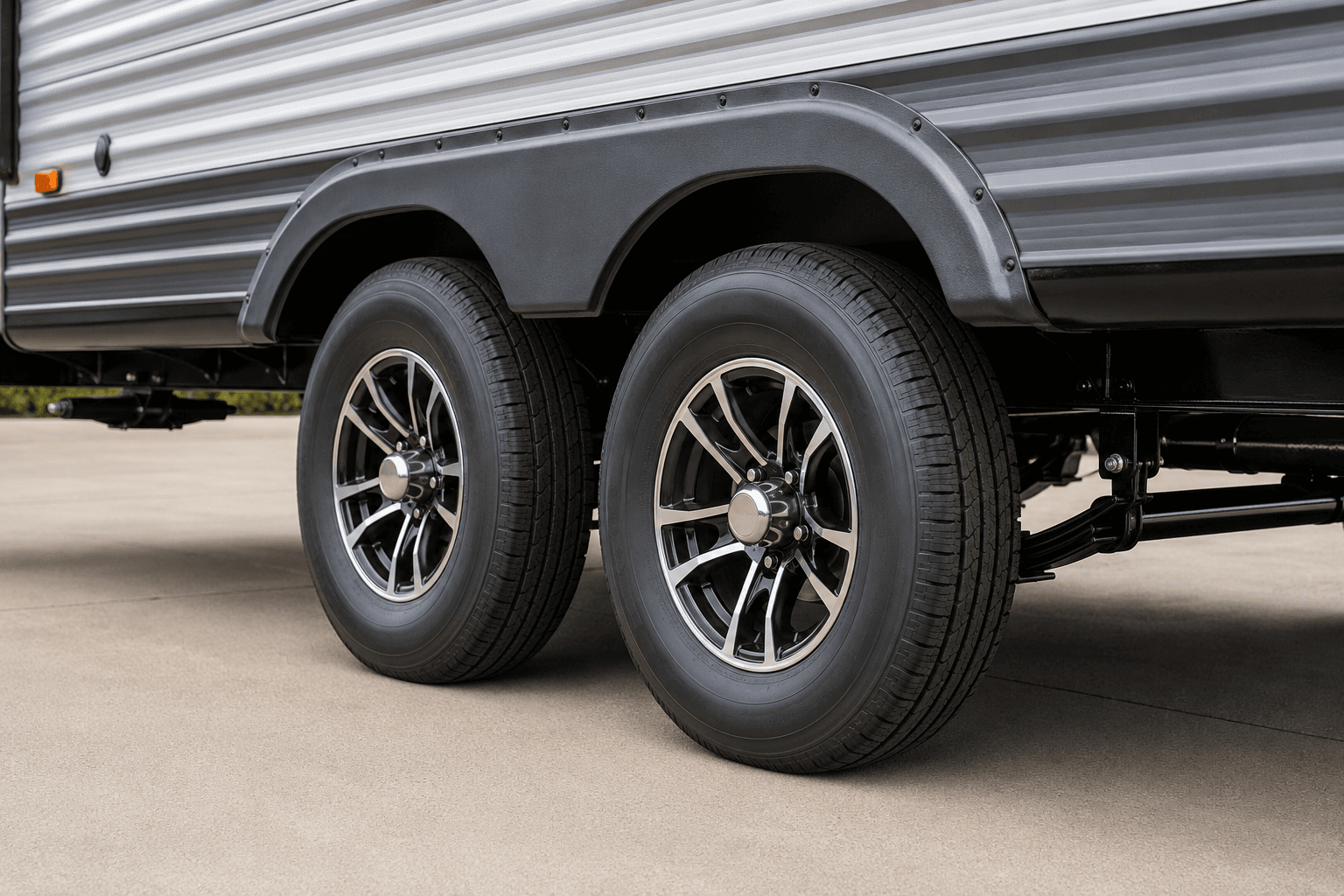
Axles, tires, wheels, receivers and hitches remain separate limits even when gross weight looks comfortable.
What the terms mean
The sidewall identifies tire size and maximum load information; vehicle and tire documentation provides the applicable cold-pressure guidance. Multiplying identical per-tire capacities gives a planning total, but it does not reveal side-to-side imbalance.
Worked example
Common mistakes
- Using the tire sidewall maximum as the vehicle’s recommended pressure
- Assuming axle weight is divided perfectly left to right
- Ignoring wheel, valve and age/condition limitations
Frequently asked questions
Can I add tire capacity to GAWR?
No. They are separate limits.
Does an axle-group scale weight show the heaviest tire?
No. Individual position weights require an appropriate measurement method.
Does TowCheck recommend a pressure?
No. Use vehicle and tire manufacturer load/inflation documentation.
Primary references
These sources support terminology and general planning context. Use the current documentation for your exact vehicle, trailer and components.
Continue with your own numbers
Run the Complete Tow Check, use the scale worksheet, or review the calculation methodology.