TOWCHECK FIELD GUIDE
How to weigh a towing setup
Load the vehicle and trailer exactly as traveled, position each axle group on the appropriate scale platform, and record the ticket and connection condition. A second tow-vehicle-only pass can support hitch-load and trailer-weight calculations when nothing inside the vehicle changes.
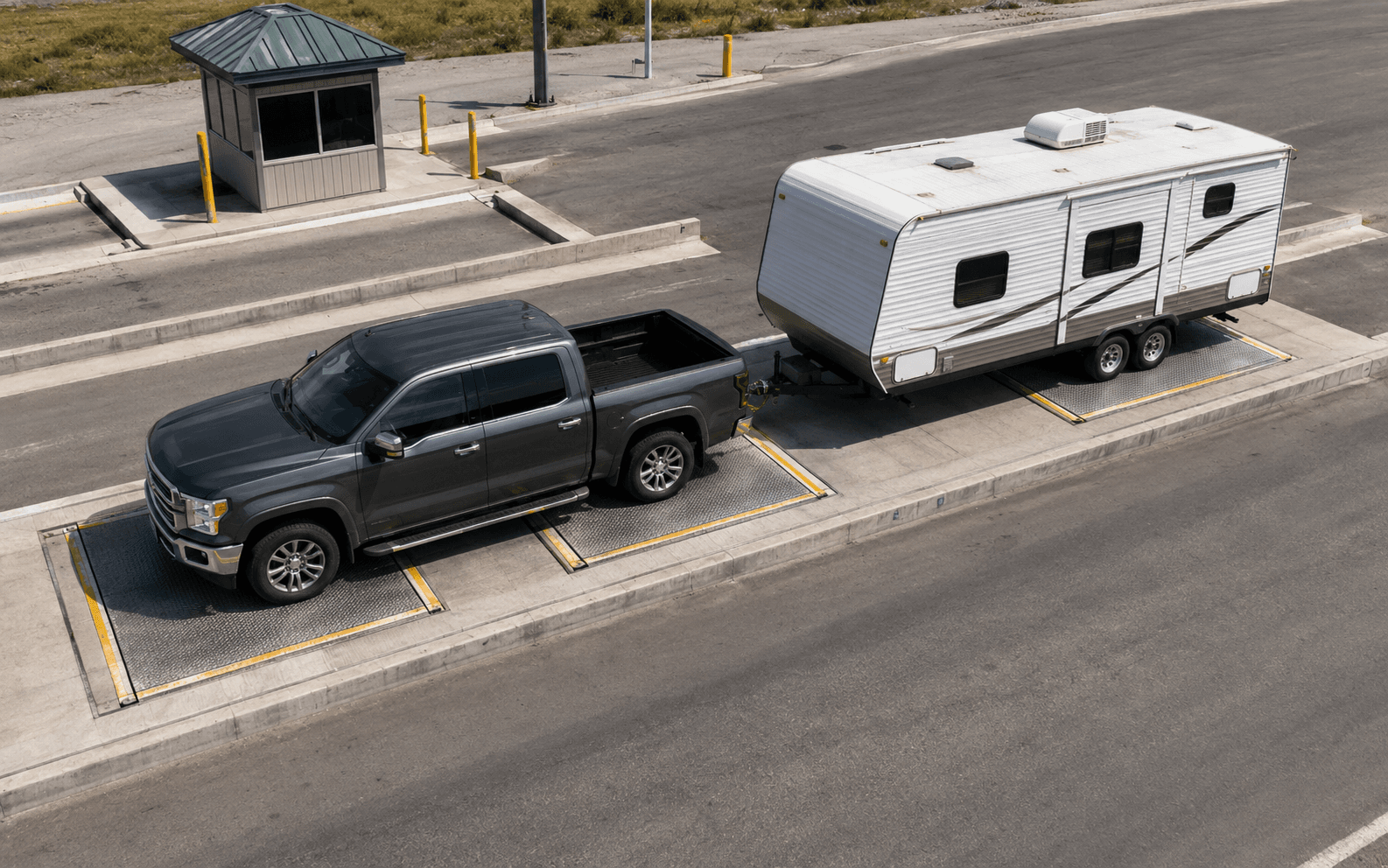
A consistent scale setup turns estimates into steer, drive and trailer axle-group measurements.
What the terms mean
A connected pass provides steer, drive and trailer axle-group measurements. A comparable disconnected pass provides the tow vehicle’s axle total without trailer-applied load. The difference between connected and disconnected vehicle totals is a calculated hitch load under those test conditions.
Worked example
Common mistakes
- Changing passengers or cargo between passes
- Weighing empty and assuming it represents travel load
- Treating an axle-group scale ticket as individual wheel weights
Frequently asked questions
Does a scale ticket certify the setup?
No. It supplies measurements to compare with applicable ratings.
Can a platform scale measure each tire position?
Not necessarily. CAT Scale states that its standard platforms provide axle and gross weights, not individual corner weights.
Should tanks be full?
Weigh the condition you want to evaluate and record fluid levels.
Primary references
These sources support terminology and general planning context. Use the current documentation for your exact vehicle, trailer and components.
Continue with your own numbers
Run the Complete Tow Check, use the scale worksheet, or review the calculation methodology.