TOWCHECK FIELD GUIDE
How to read a truck scale ticket
A typical three-platform ticket reports steer axle, drive axle, trailer axle group and gross weight. Match each line to the axle position used during the pass and record whether the trailer was connected and whether weight distribution was engaged.
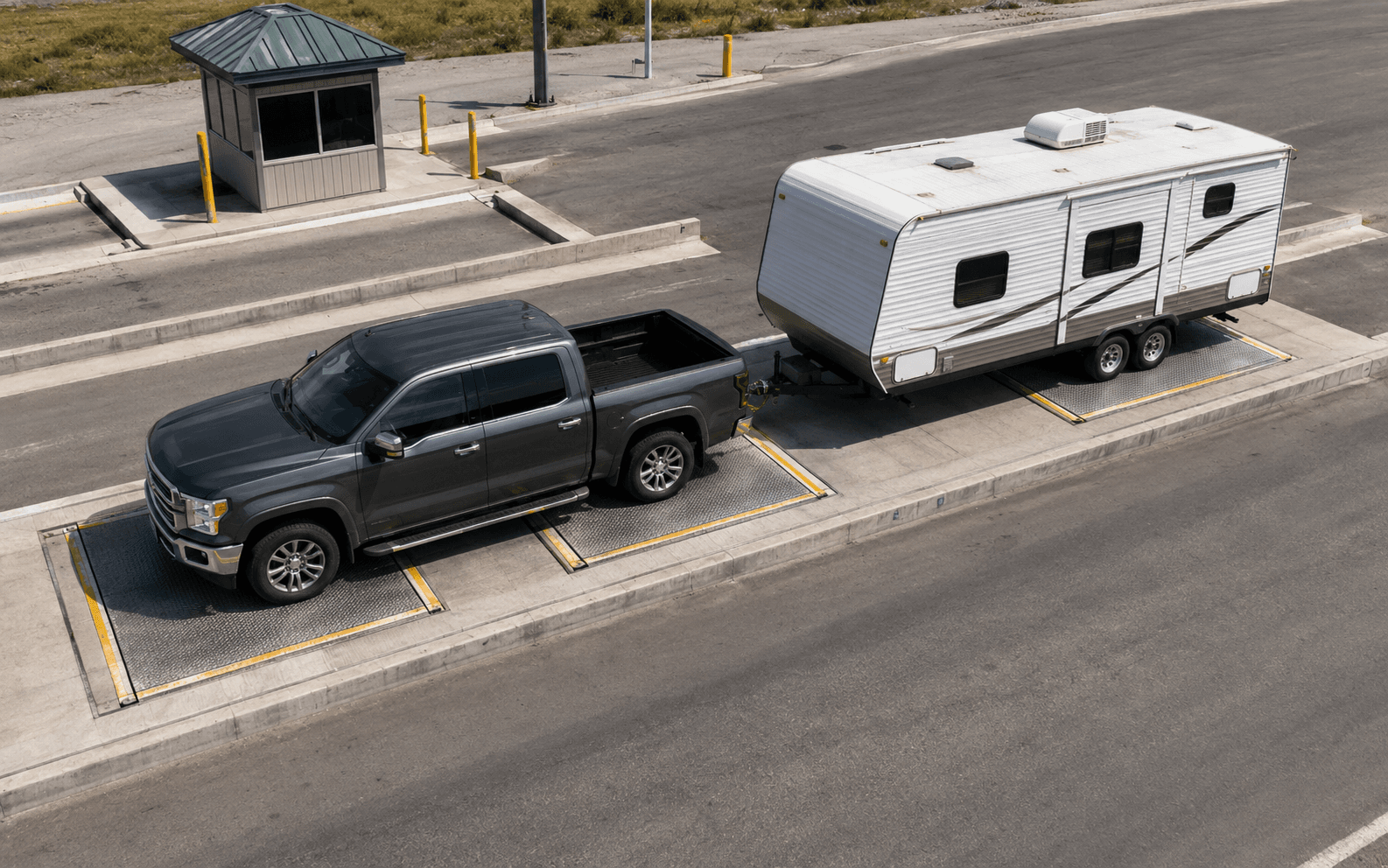
A consistent scale setup turns estimates into steer, drive and trailer axle-group measurements.
What the terms mean
The gross value should equal the displayed axle groups for that pass. A ticket does not automatically identify tongue weight, individual trailer axles or left-to-right loading; those require additional consistent passes or different equipment.
Worked example
Common mistakes
- Calling gross weight the trailer weight
- Comparing a combined axle group with one tire’s rating
- Forgetting whether spring bars or passengers changed between passes
Frequently asked questions
Why does TowCheck ask for a second pass?
A comparable tow-vehicle-only pass supports calculated hitch and trailer values.
Can I edit a scale ticket?
CAT Scale states printed tickets cannot be altered.
Can I weigh one side on a CAT Scale?
CAT Scale says its platform process does not provide individual corner weights.
Primary references
These sources support terminology and general planning context. Use the current documentation for your exact vehicle, trailer and components.
Continue with your own numbers
Run the Complete Tow Check, use the scale worksheet, or review the calculation methodology.