TOWCHECK FIELD GUIDE
Payload vs. towing capacity
Payload limits what the tow vehicle carries; towing capacity limits trailer weight under the manufacturer’s stated conditions. A trailer can be below the advertised tow rating while its tongue or pin load pushes the vehicle beyond payload.
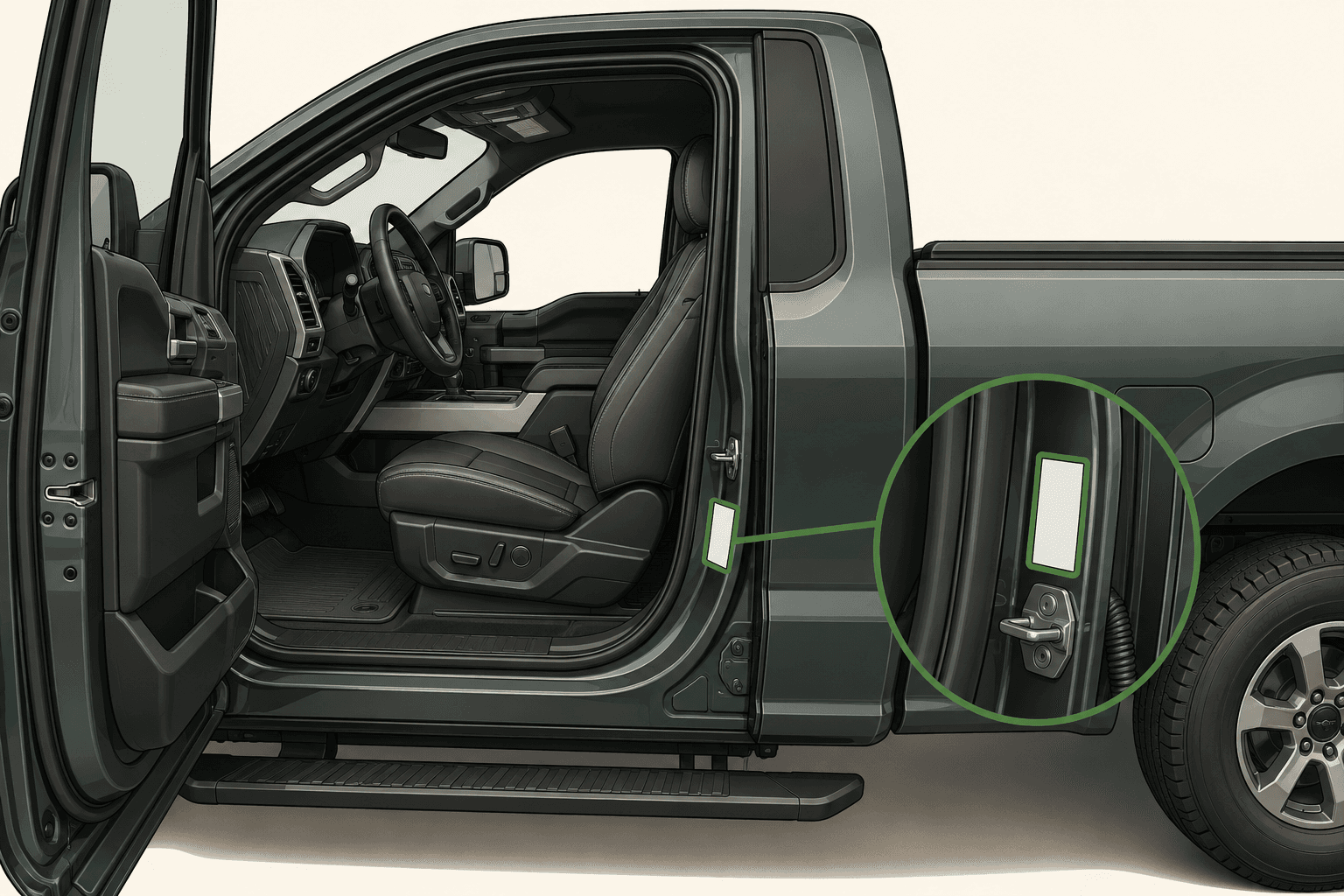
The physical door labels identify ratings for that truck—not a better-equipped brochure example.
What the terms mean
Payload includes people, in-vehicle cargo, accessories, hitch hardware and the trailer load carried at the hitch. Tow rating applies to the loaded trailer. GVWR, GAWR, GCWR, receiver and tire ratings remain separate checks.
Worked example
Common mistakes
- Subtracting the entire trailer weight from payload
- Using a brochure maximum for a differently equipped vehicle
- Forgetting hitch hardware, bed covers, steps and other installed equipment
Frequently asked questions
Which rating usually becomes tight first?
That depends on the exact combination, but payload is commonly the first surprise because tongue or pin weight and passengers share it.
Does extra tow rating create payload?
No. The ratings describe different limits and cannot be traded.
Can I calculate my label payload from an online curb weight?
Use the vehicle-specific label whenever available; generic curb weights can omit configuration and option differences.
Primary references
These sources support terminology and general planning context. Use the current documentation for your exact vehicle, trailer and components.
- Ford: What is payload capacity?
- Ford RV & Trailer Towing Guide
- NHTSA interpretation: GVWR and GAWR definitions
Continue with your own numbers
Run the Complete Tow Check, use the scale worksheet, or review the calculation methodology.