TOWCHECK FIELD GUIDE
How to read a tow vehicle door sticker
Open the driver door and locate the Tire and Loading Information label and certification label. Photograph both, then record the vehicle-specific occupant-and-cargo capacity, GVWR and front and rear GAWR exactly as printed.
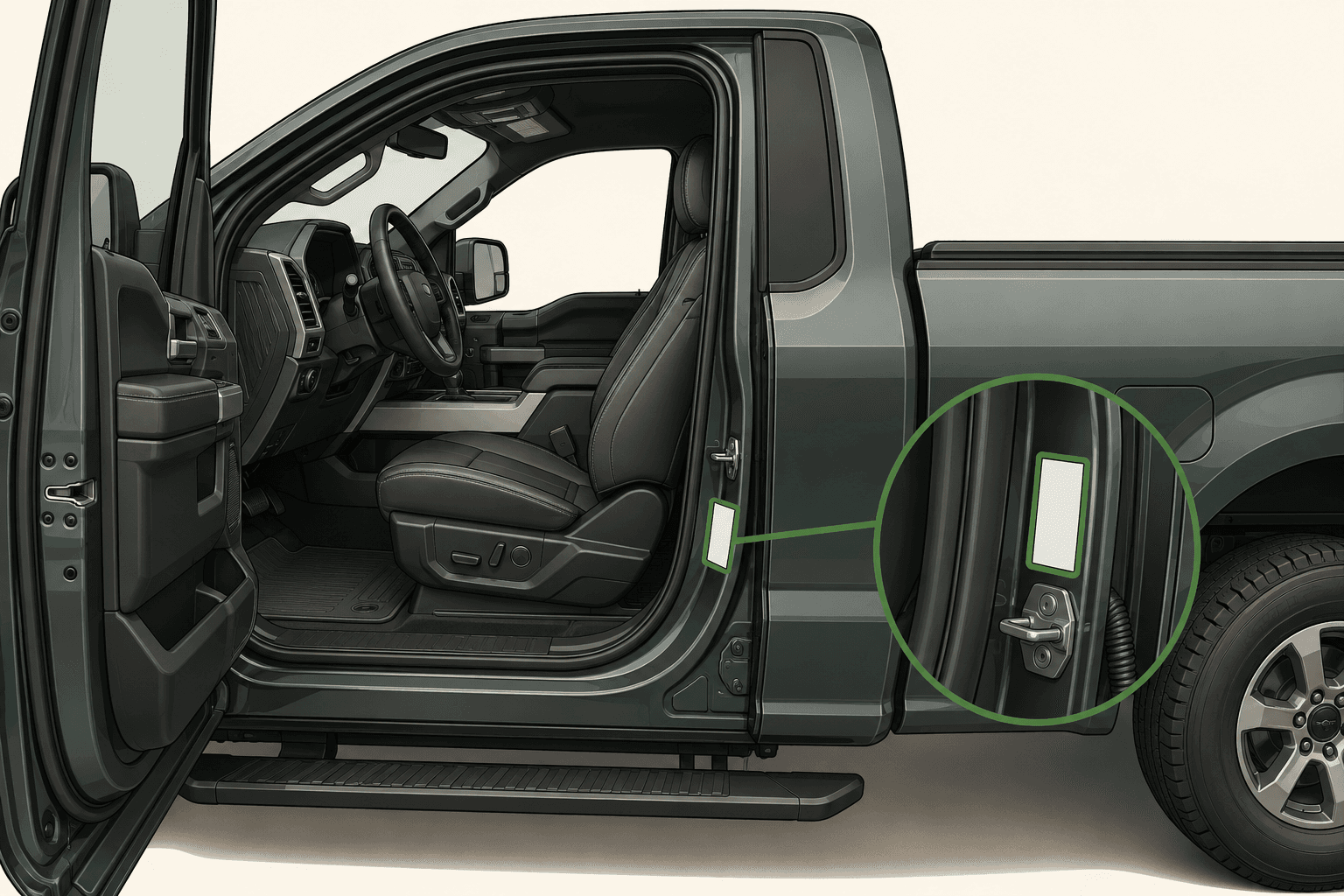
The physical door labels identify ratings for that truck—not a better-equipped brochure example.
What the terms mean
GVWR is the manufacturer-specified loaded weight of one vehicle. GAWR is the specified capacity of one axle system. The occupant-and-cargo statement is the starting payload figure for that particular vehicle as built.
Worked example
Common mistakes
- Reading a label from another vehicle
- Confusing recommended cold tire pressure with the tire sidewall maximum
- Ignoring equipment installed after the vehicle left the factory
Frequently asked questions
Where are the labels?
Usually on the driver-side B-pillar, door edge or door opening, though placement varies.
Does the label include later accessories?
Not necessarily. Account for equipment added after manufacture according to applicable documentation.
Can a VIN decoder replace the physical label?
Use the physical label and official documentation for the exact vehicle whenever possible.
Primary references
These sources support terminology and general planning context. Use the current documentation for your exact vehicle, trailer and components.
- Ford: What is payload capacity?
- NHTSA interpretation: GVWR and GAWR definitions
- NHTSA FMVSS 110 tire-selection test procedure
Continue with your own numbers
Run the Complete Tow Check, use the scale worksheet, or review the calculation methodology.