TOWCHECK FIELD GUIDE
Fifth-wheel pin weight and truck payload
A fifth wheel transfers a substantial part of its loaded weight into the truck bed through the hitch. That pin load, the hitch itself, passengers and truck cargo all consume the same vehicle payload.
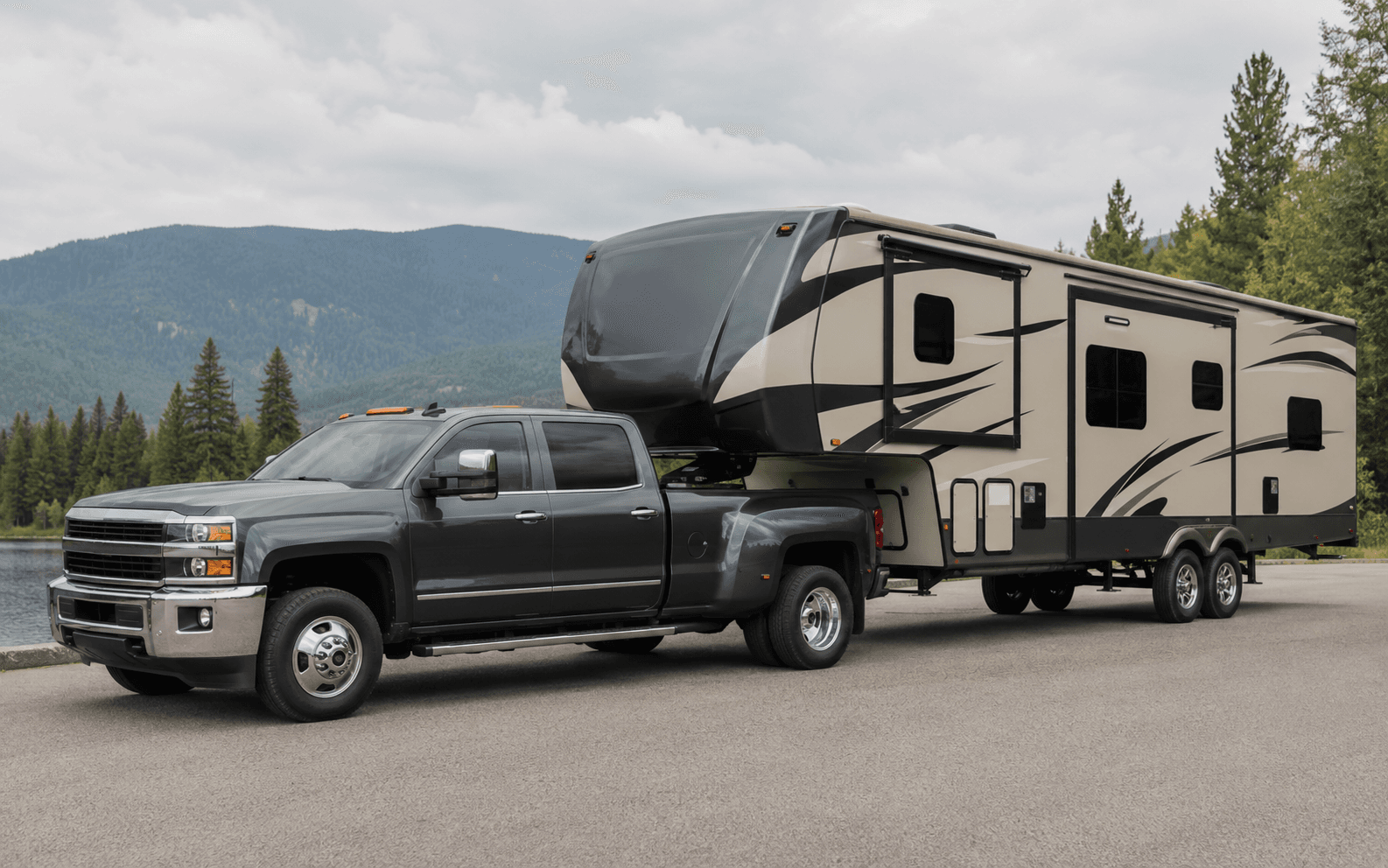
Loaded pin weight, hitch hardware, passengers and cargo all compete for the same payload.
What the terms mean
Dry pin weight describes an unloaded manufacturer condition. Loaded pin weight depends on cargo, fluids, options and their placement. Payload, rear GAWR, tire capacity, hitch rating, trailer rating and GCWR must remain independent checks.
Worked example
Common mistakes
- Using dry pin weight with loaded trailer weight
- Forgetting the fifth-wheel hitch hardware
- Checking GCWR while ignoring rear axle and tire loads
Frequently asked questions
What percentage should I enter?
Use the trailer manufacturer’s loaded guidance or a measurement. A percentage estimate is only a shopping scenario.
Does a higher tow rating solve payload?
No.
What should I measure after purchase?
At minimum, obtain appropriate connected axle weights and compare them with every applicable rating.
Primary references
These sources support terminology and general planning context. Use the current documentation for your exact vehicle, trailer and components.
Continue with your own numbers
Run the Complete Tow Check, use the scale worksheet, or review the calculation methodology.