TOWCHECK FIELD GUIDE
How to check payload before buying a trailer
Start with the exact tow vehicle’s payload label, reserve room for people and existing equipment, add hitch hardware, then estimate loaded—not dry—tongue or pin weight. The payload remainder determines whether the shopping scenario deserves further evaluation.
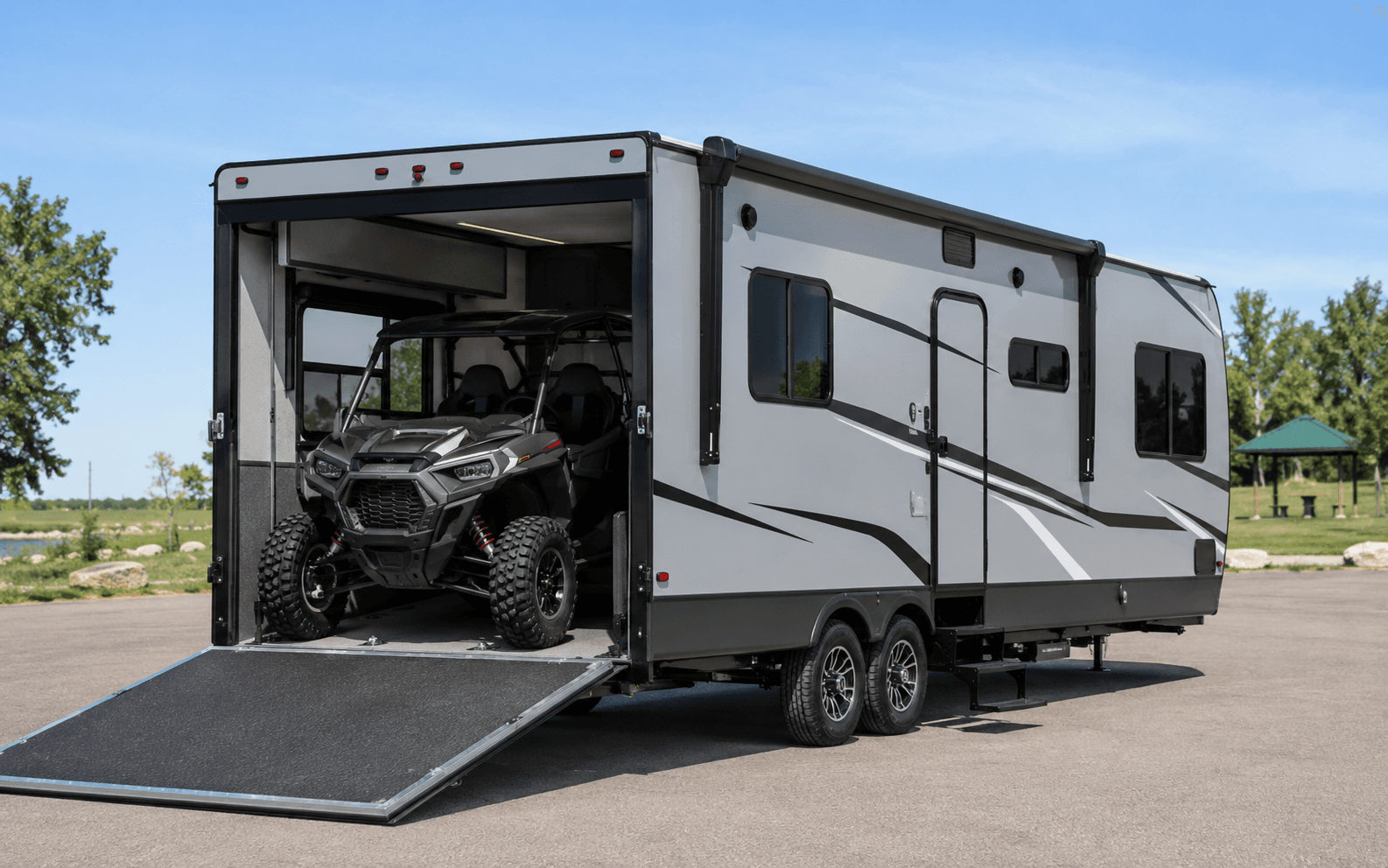
Toy placement, water, batteries and supplies affect payload and hitch-load assumptions together.
What the terms mean
This is a screening workflow, not a complete match. A combination that fits the payload estimate still needs GVWR, GAWR, GCWR, trailer, receiver, tire, brake and manufacturer compatibility checks.
Worked example
Common mistakes
- Letting the dealer use only maximum tow rating
- Entering unloaded brochure hitch weight
- Leaving no allowance for installed accessories or future cargo
Frequently asked questions
Should I shop by trailer GVWR?
Using GVWR can be a conservative first screen when actual loaded weight is unknown, but it is not a prediction.
Can a dealer sticker replace vehicle labels?
No.
What should I photograph?
Vehicle payload, certification and tire labels plus trailer certification and loading labels.
Primary references
These sources support terminology and general planning context. Use the current documentation for your exact vehicle, trailer and components.
Continue with your own numbers
Run the Complete Tow Check, use the scale worksheet, or review the calculation methodology.